Alejandro Romero – Amisha Bavadiya – Jahan Selim – Selin Dastan
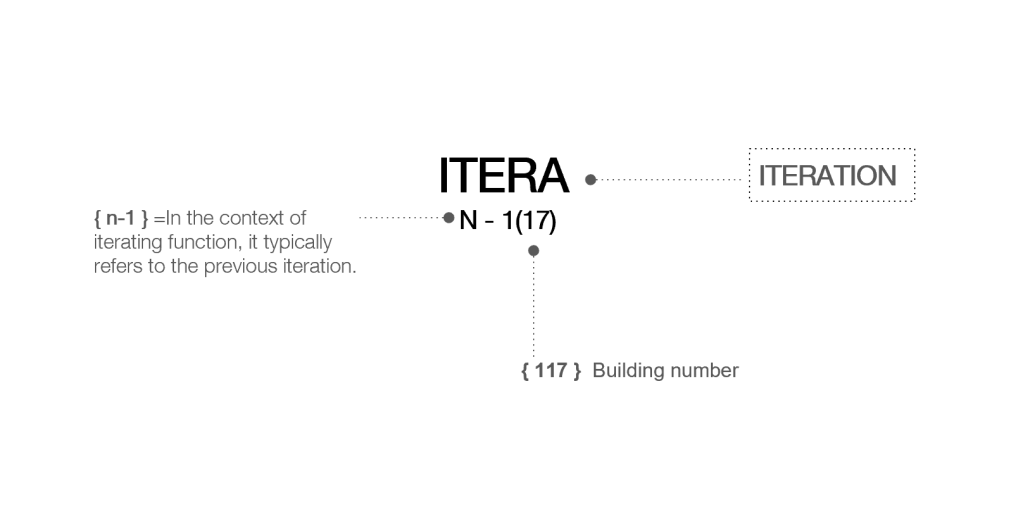
In fractal generation, each step in the process of transforming a starting point or shape into a more complex pattern is called an iteration, represented by “n”.
Study Area for the City of Yes Midtown South

The project area is Midtown South, with our main concept being the ‘Where We Live, NYC’ plan as part of the NYC”s ‘City of Yes’ program to solve the problems of housing.
Study Area for the ‘City of Yes’ Midtown South Mixed-Use Plan
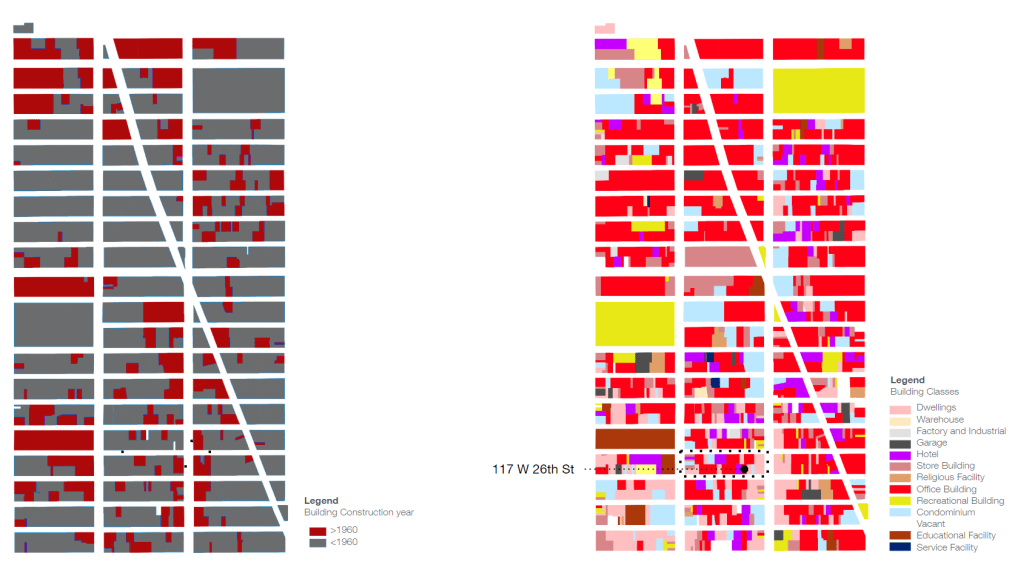
The Midtown South Mixed-Use Plan aims to create housing opportunities and increase demand for commercial office space, fostering city growth.
Site – 117 W 26th Street
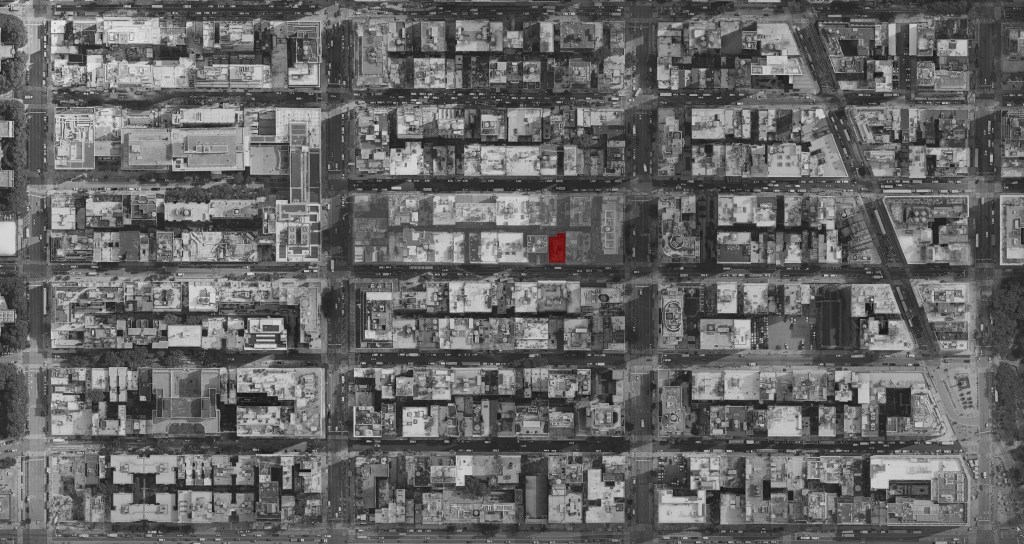
This is our project site, and we chose it for several reasons. Firstly, it permits 2,300 homes through various zoning rules. Furthermore, its central location, excellent transit access, and proximity to strong job centers make it an ideal location for housing development.
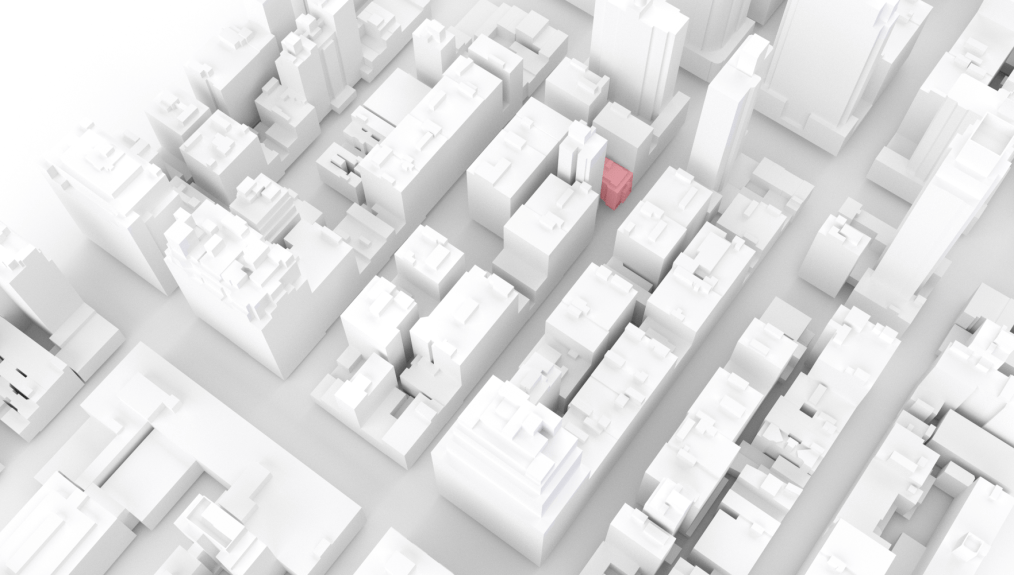
Another reason is the potential to add 5 more floors, based on FAR (Floor Area Ratio) map information, which influenced our decision to choose this area.

The building selected for the project. Currently, part of the building is used for commercial purposes and part is empty. It is a perfect choice for conversion to a new housing project.
“Brion Tomb” designed by Carlo Scarpa
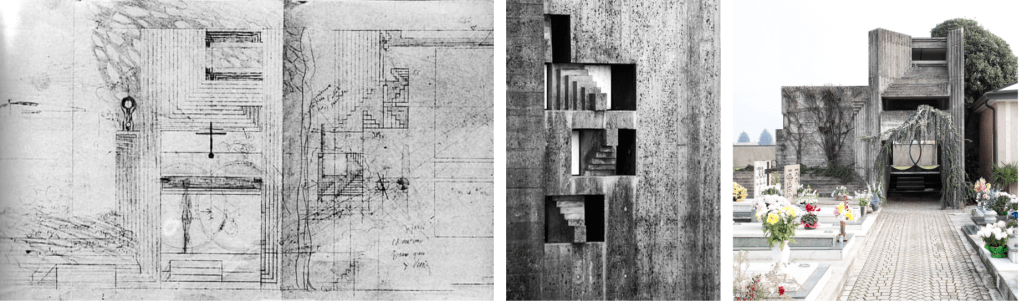
We looked at Carlo Scarpa’s work for ideas and inspiration for our project. The above images are of the Brion Tomb and he is renowned for his extraordinary attention to details and his seamless fusion of traditional and modern architectural styles.
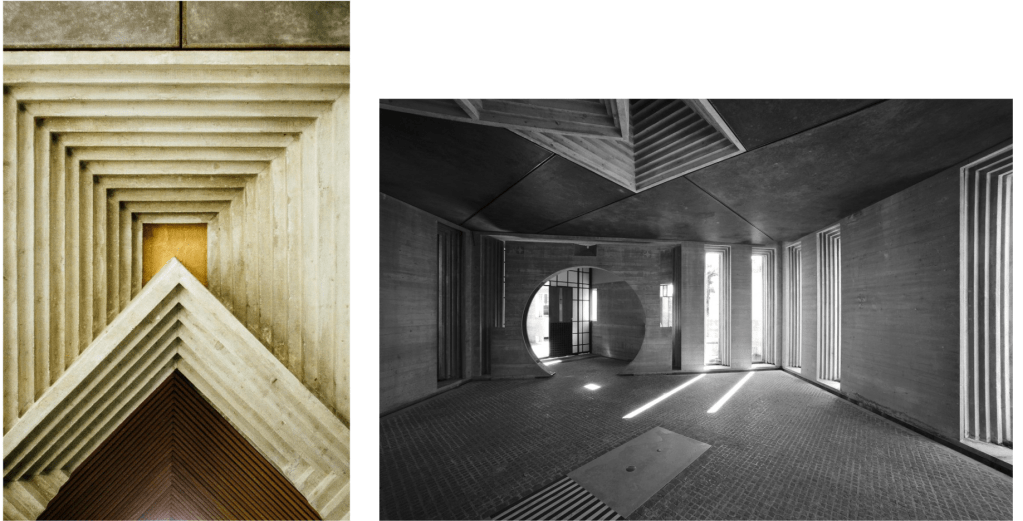
The design of the Tomb showcases his profound engagement with geometric forms, the adept manipulation of light and shadow, meticulous articulation of architectural elements, and a rich exploration of textures and contrasts.
“Olivetti Showroom” Designed by Carlo Scarpa
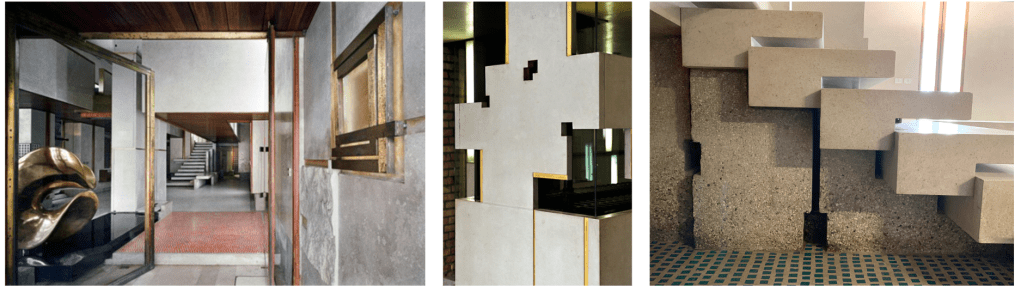
He artfully combines different materials such as wood, stone, and uses their unique textures and properties to create spaces that are both visually striking and harmoniously integrated with the surroundings.
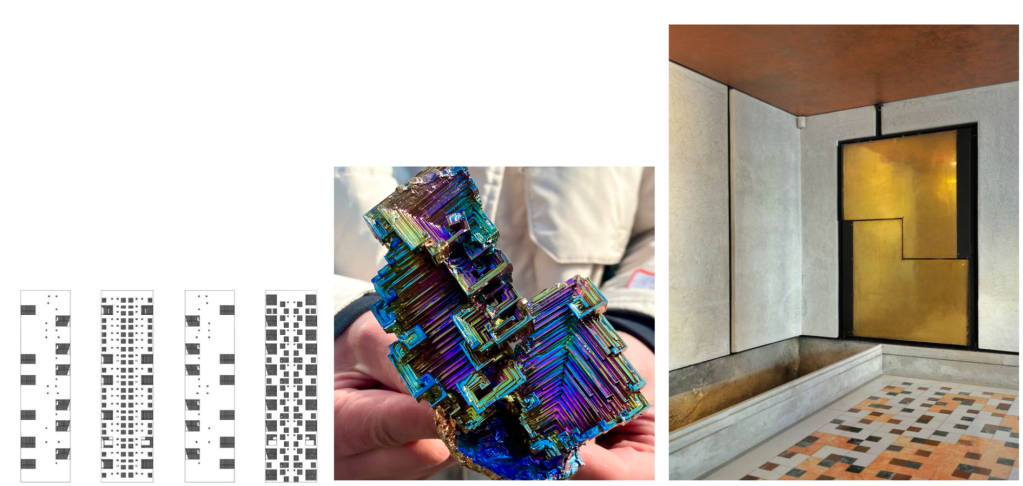
After exploring Carlo Scarpa’s work, the three images formed the core concepts for our project. The first image gave us an idea to play with mass and voids. The second image, which looks like a crystal, highlights Scarpa’s detailed and repetitive geometric style.
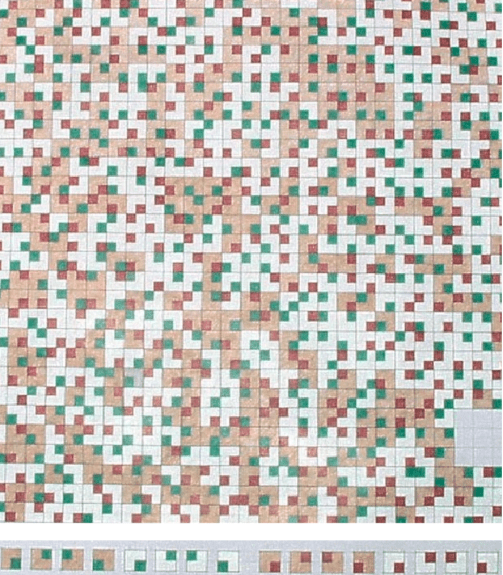
And by looking at the pavement designed by Carlo Scarpa at the Museum of Palazzo Querini Stampalia in the third image, we were inspired by the simple yet effective rules he used. Scarpa’s approach reflects a computational mindset, showing an indirect connection to cellular automata (CA). While we don’t intend to directly copy Scarpa’s work, we thought about how a rule-based system (CA) could guide machine learning to create design.
Cellular Automata


“The limits to prediction in ecological systems-Stuart A.Kauffman”
Cellular automata are like a grid where each cell, changes based on simple rules from the cells next to it. This grid can keep changing forever, creating different patterns of mass and voids.
Mass and Voids

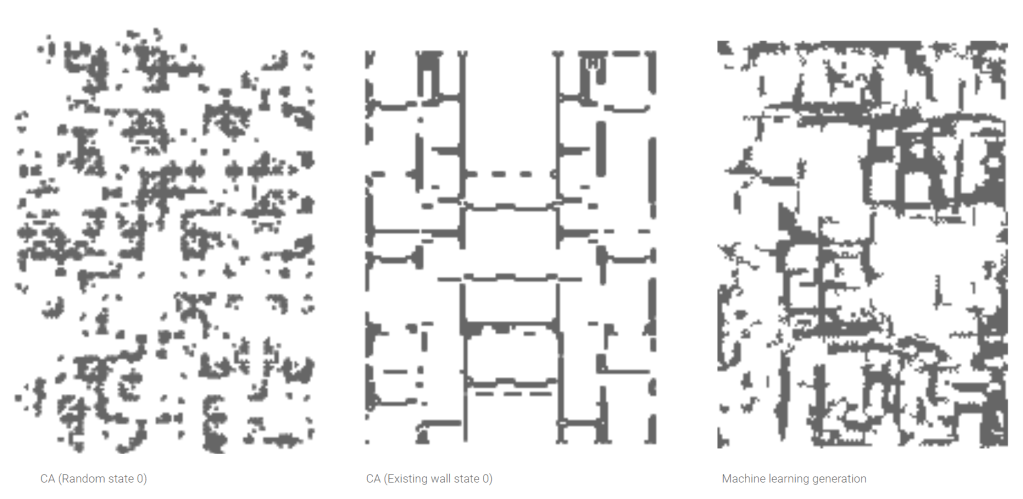
The initial plan demonstrated how architects create mass and voids, prompting us to apply cellular automata (CA) to enhance this process. Initially, we generated a CA configuration (random state 0) which resulted in a pattern with more mass and less void. We aimed for a configuration with less mass and more voids. Subsequently, we modified the CA with the existing walls, achieving the desired outcome. The last image depicts how machine learning predicted the distribution of mass and voids.
Pix2Pix Algorithm Model
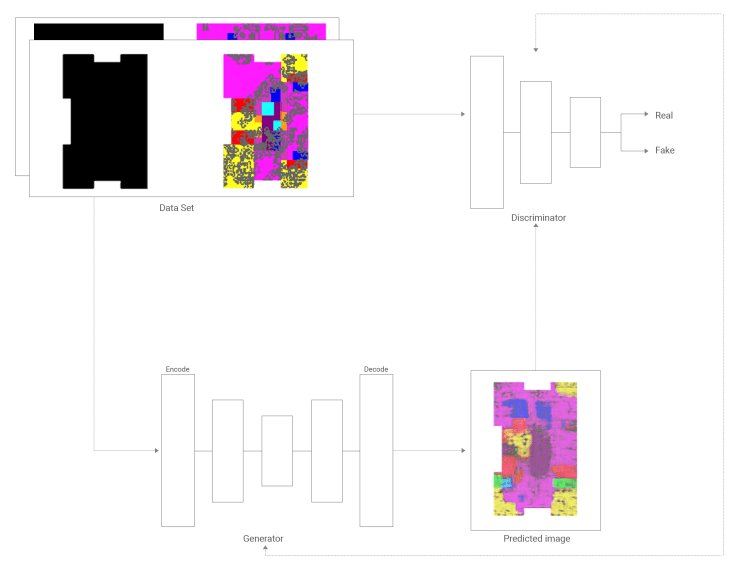
In the Pix2Pix model, both the input image and the ground truth are used to train the machine learning system. The model learns from this dataset, utilizing a generator to create predicted images and a discriminator to evaluate how realistic they are.
Data sets -Architectural Plan
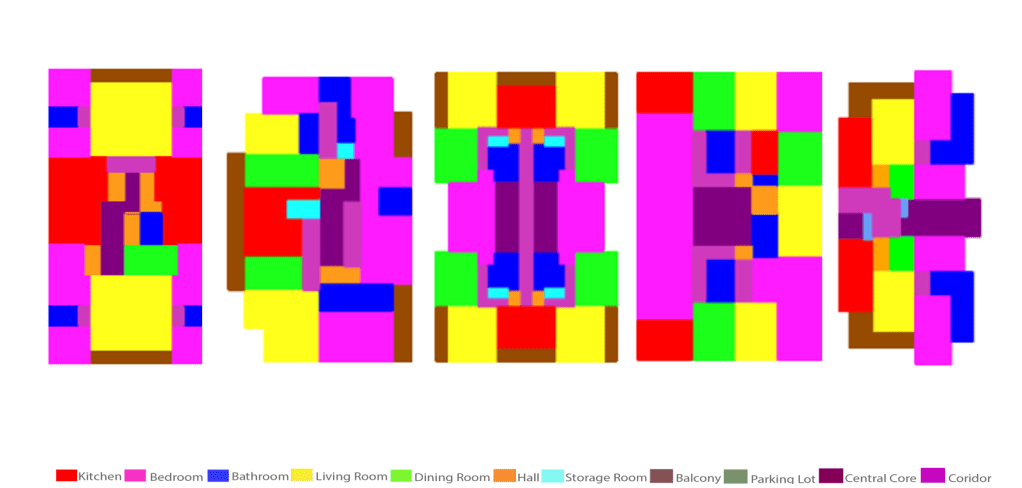

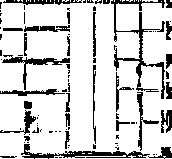
We began by creating our own datasets of architectural plans. We focused on selecting plans with the service core in the center, matching the layout of our existing building.
Data sets – Original Plan

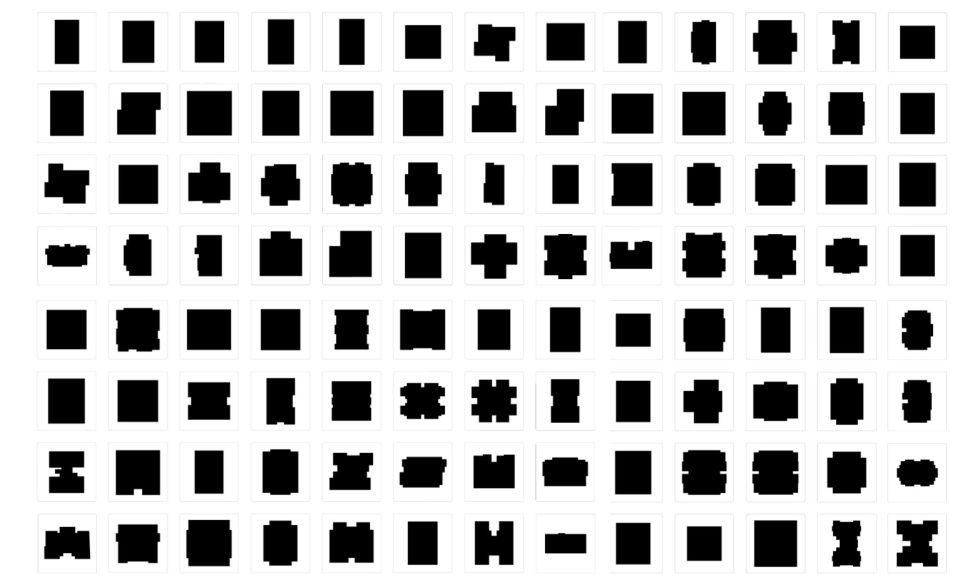
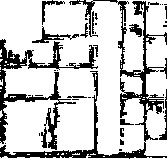
This dataset consists of the outer boundaries of the architectural plan, depicted as completely black areas. These boundaries indicates the maximum or minimum extents within which architectural spaces can be placed. This dataset helps the ML model understand the spatial constraints and the permissible building area.
Data sets – C.A. for Plan
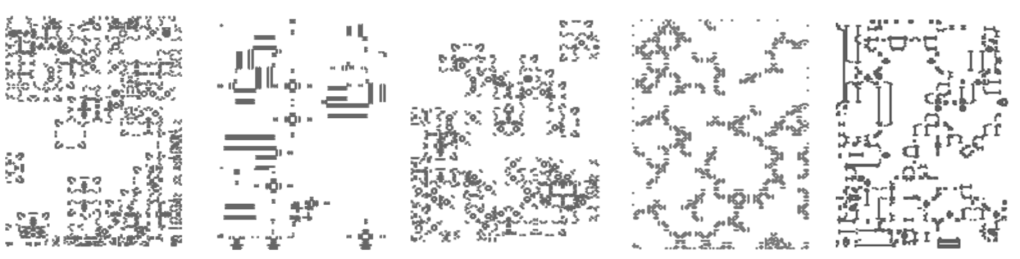

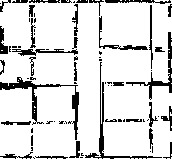
We created an additional dataset focused on Cellular Automata (CA), which illustrates various configurations of mass and voids.
Data sets – Combined

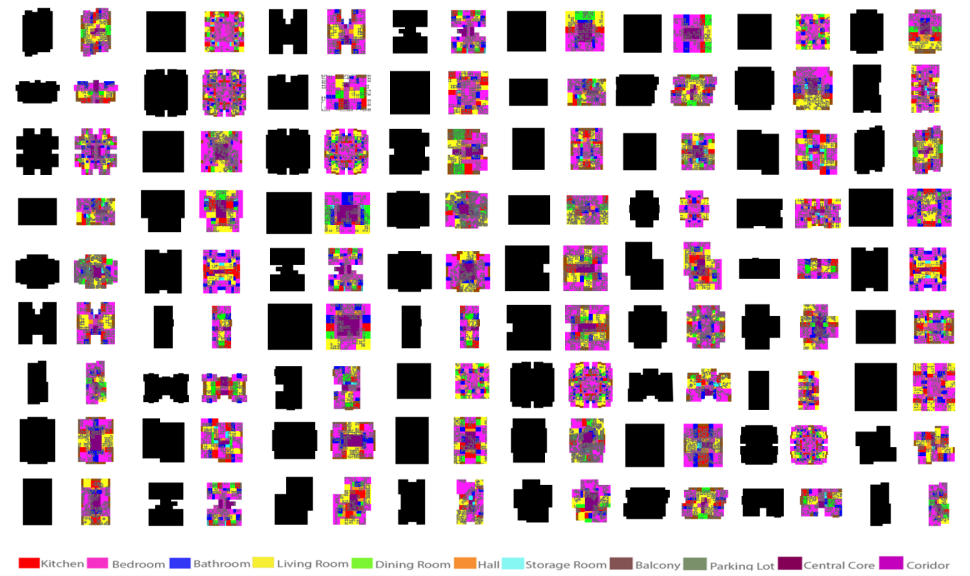
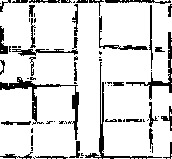
We overlaid the Cellular Automata (CA) representations of mass and voids onto the architectural plans to create a unique dataset. This integration allows us to explore how different configurations of space interact with established architectural layouts.
Data sets – Architectural Section
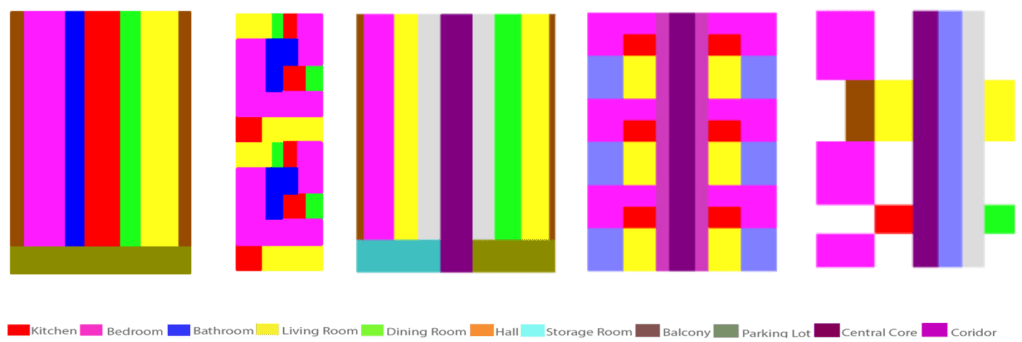

We created the same datasets for architectural sections same as the plan and trained the machine learning model, enabling it to learn.
Data sets – Original boundary for Section


Data sets – Combined Section
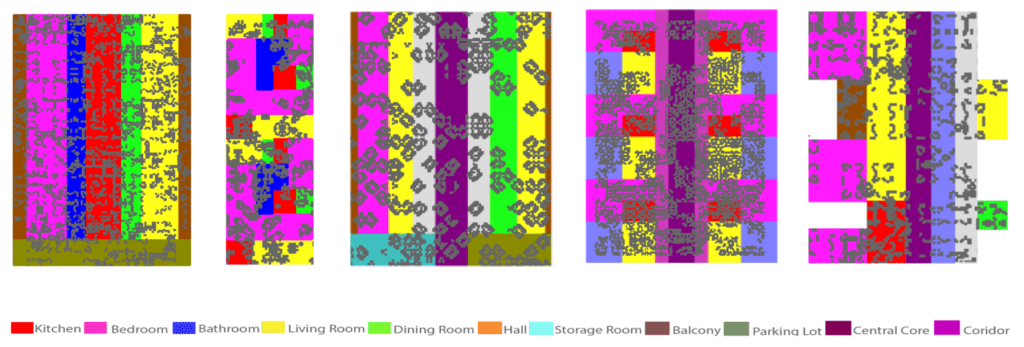
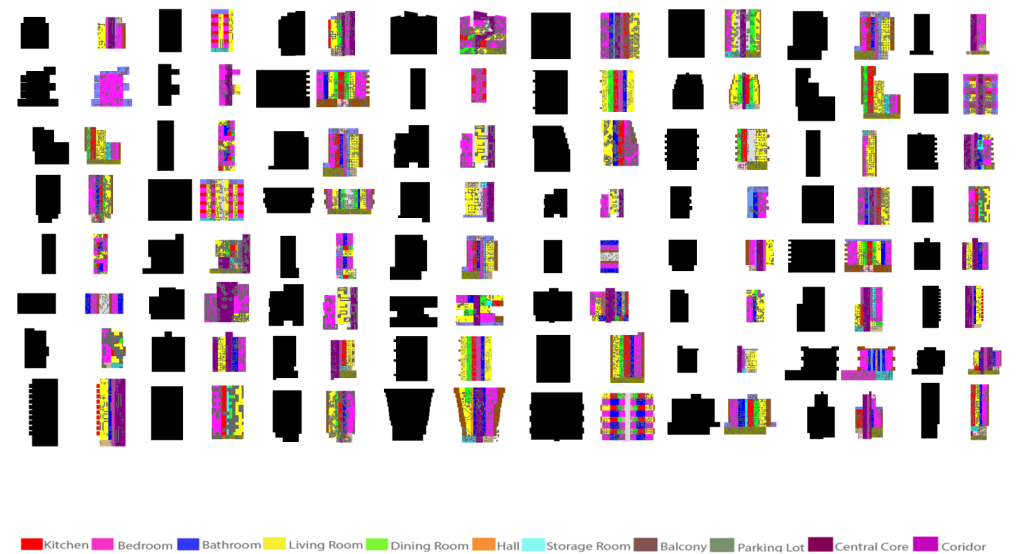
We superimposed the Cellular Automata (CA) representations of mass and voids onto architectural sections, crafting a distinctive dataset. This dataset will be used to train a machine learning model, allowing us to analyze the outputs it generates and assess its spatial planning capabilities.
Predicted Image Generated by Machine Learning -Plan
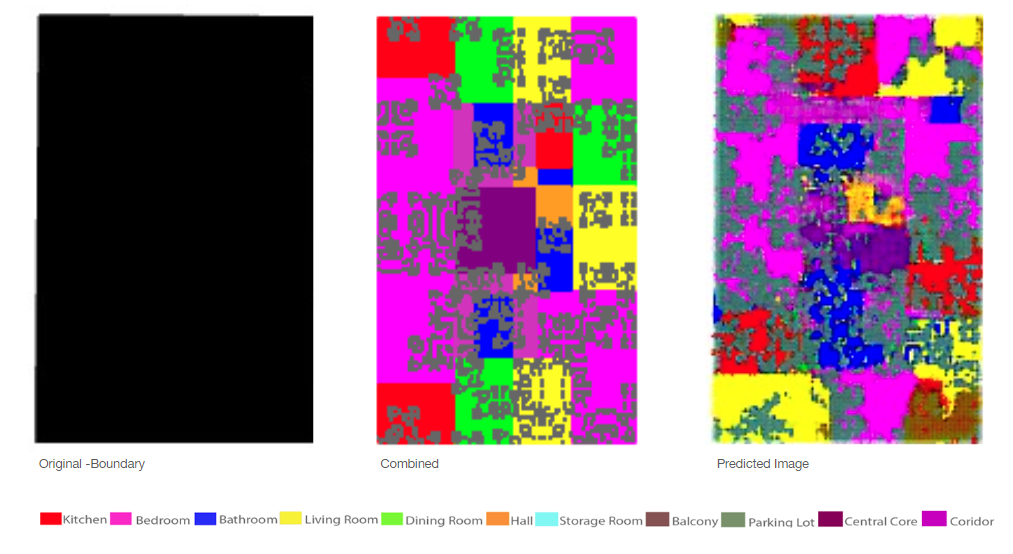
The first image is the original boundary that we supplied the machine learning system, and the other is the ground truth, which is the merged architectural plan with the CA. The output is the predicted image where we can see how machine learning distributed the mass and voids and the architectural spaces.
Predicted Image Generated by Machine Learning -Longitudinal Section
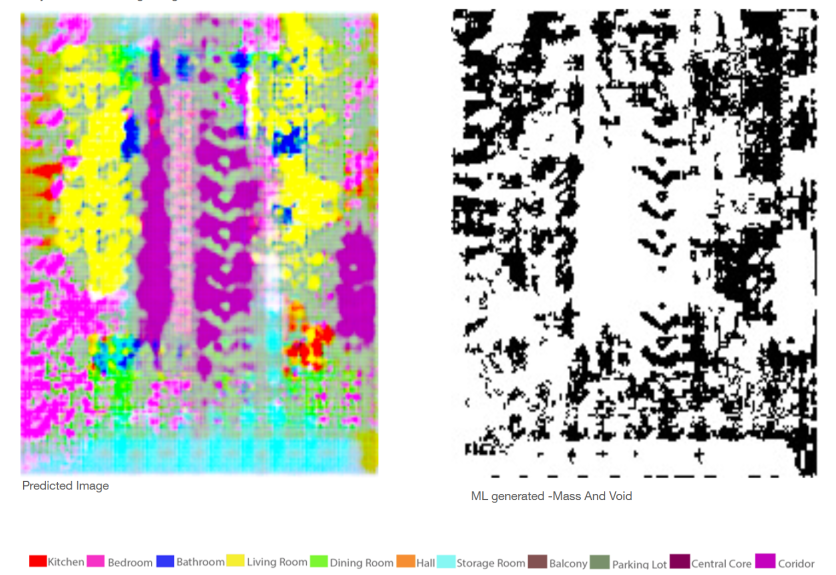
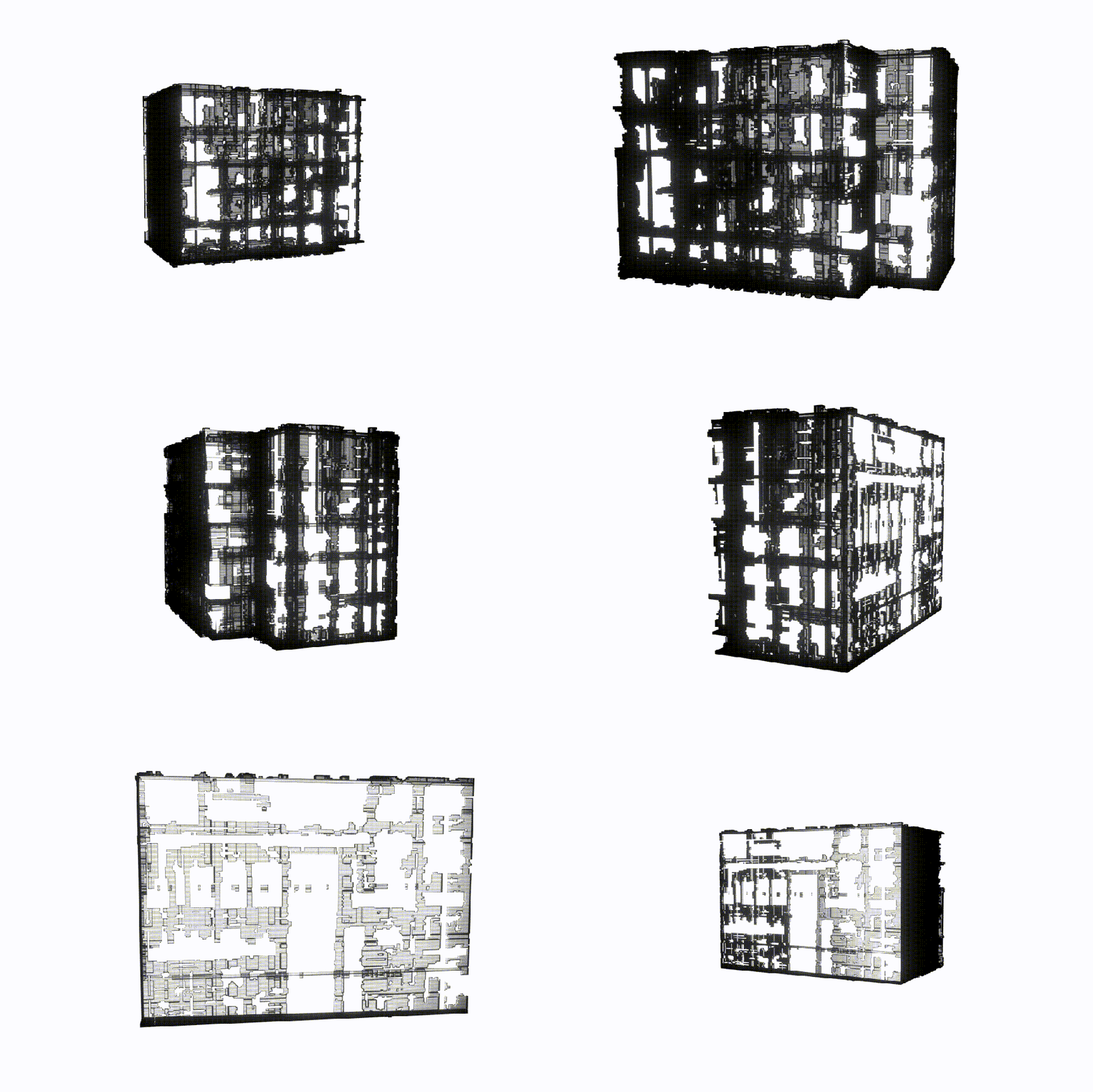
The image generated by the machine learning model was unexpected and didn’t resemble typical architectural plans, nor was it something produced by Cellular Automata or seen in ground truth set.Next, we used pixel projection to transform the design into 3D. Unable to use the predicted image directly, we instead extracted high-contrast images, which you can see on the right-hand side.
Here are three different results from our first exploration.
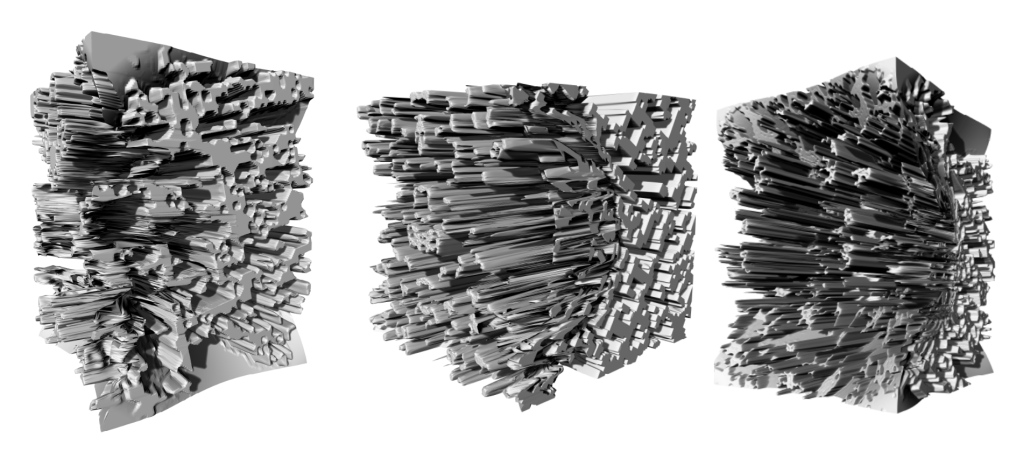

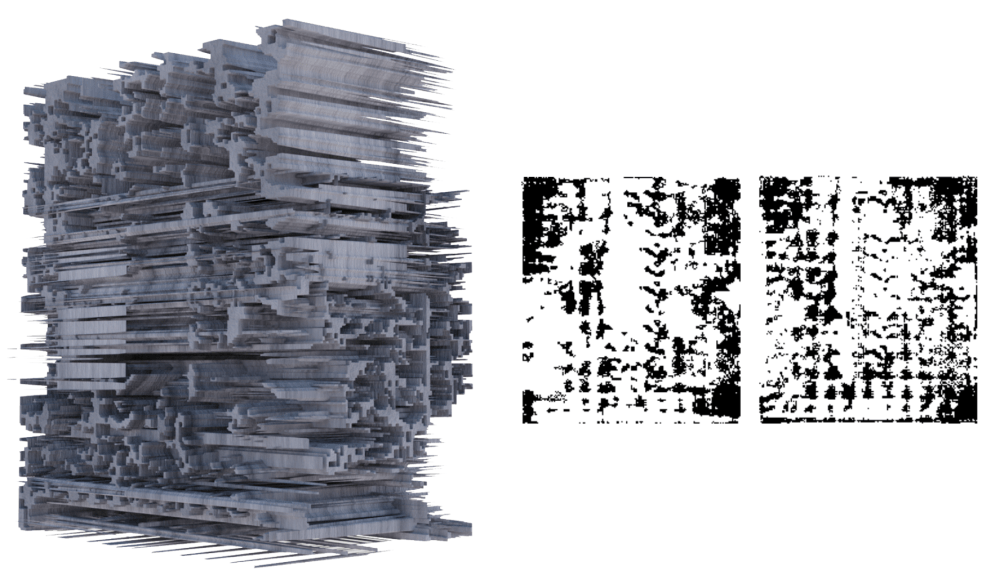


Above are several examples of 3D models which features materials such as concrete, wood . These models draw inspiration from Carlo Scarpa’s distinctive approach to combining materials in architecture .
The question was how to inhabit the spaces, as it was clearly visible from the 3D model that there was a problem with mass—it had more mass and fewer voids.
Data sets – CA for Plan
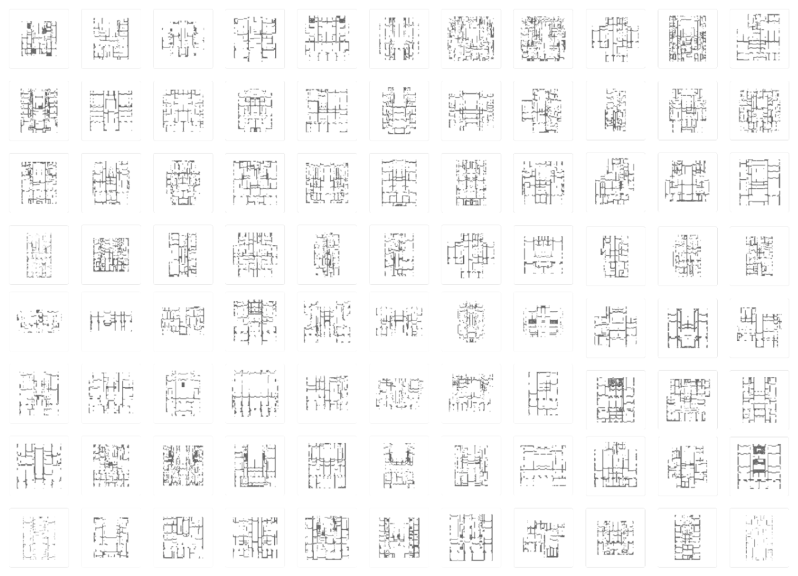
So, we tried again to generate the Cellular Automata based on the existing walls, aiming for less mass and more voids. The result was exactly as we desired.
Data sets – Combined with Existed Plan and CA

Data sets – Plan
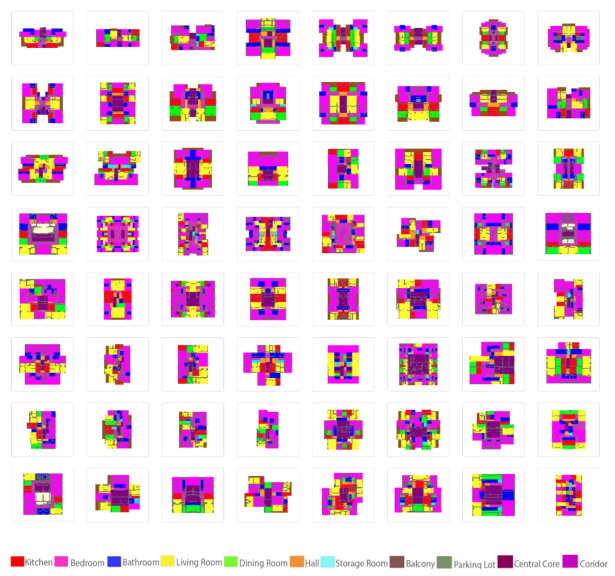
This is the combined architectural plan and the new Cellular Automata model with less mass and more voids. We fed it into the machine learning system to see how it would generate the output.
Data sets – Combined with Existed Section and CA

Data sets – CA for Section

Predicted Image Generated by Machine Learning for Plan
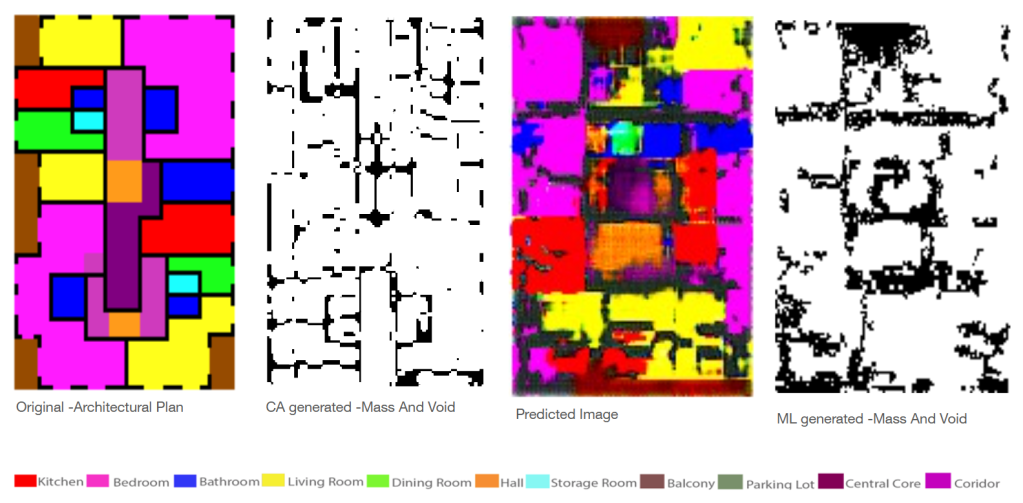
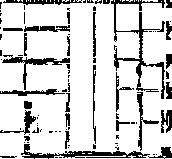
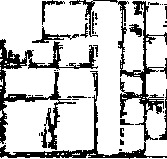
The first image shows the original architectural plan, the second displays the mass and voids generated by Cellular Automata, and the third is the image predicted by the machine learning model.
Predicted Image Generated by Machine Learning for Section

Application of the project


Communal Functional Spaces Fitness Center-Outdoor BBQ and Picnic Area-Community Room- Playroom/Children’s Area-Rooftop Garden or Terrace

Functional Spaces in an Apartment Living Rooms-Kitchens-Bedrooms-Bathrooms-Entry Halls-Utility Rooms/Closets-Balcony/Patio-Storage Rooms-Home Offices/Study Areas
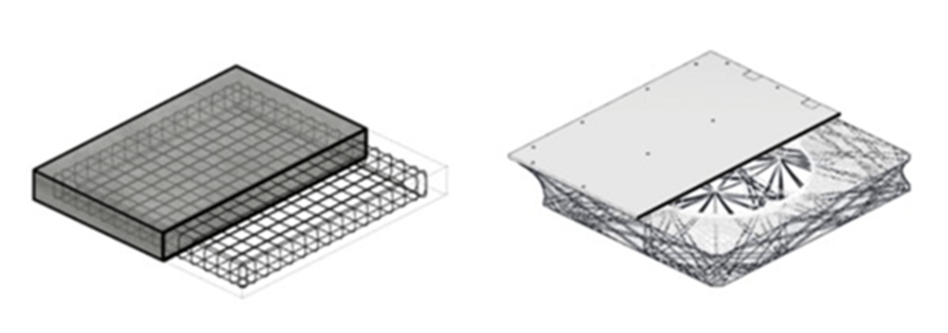
The materials for vertical extension would be light weight construction materials. We have explored may light-weight materials for the extension of the building. One of the possibilities is the use of Maison fibers (consists of carbon and glass fibers) with treated timber. The Maison fiber has been tested at the University of Stuttgart’s Building Research exhibition in 2021 that it is possible to build stories with materials 50 times lower weight than reinforced concrete. (Comparison of materials weight and strength (200 mm concrete slab: 500 kg/m2 weight. Maison Fiber composite structure: 9.9 kg/m2 weight. 27 mm timber floor: 23.7 kg/m2 weight.)
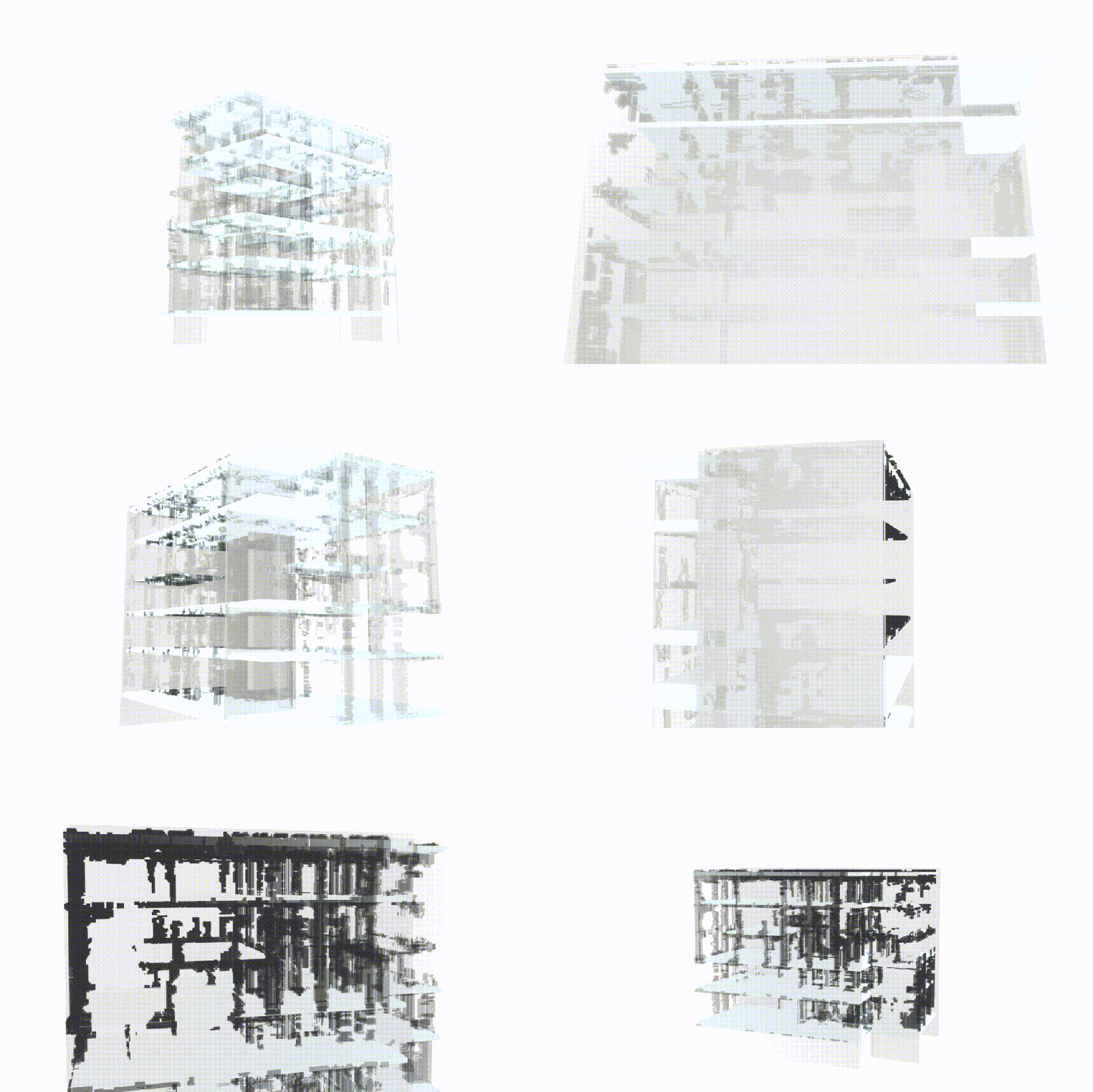
Below are the various animations of the conceptual 3D modeling for the project building.
























 A{AI}
A{AI} 