
Abstract
This research paper delves into the complex landscape of urban development in Dhaka, Bangladesh, a dynamic metropolis grappling with the challenges of rapid urbanization. With a population exceeding 20 million, Dhaka’s unchecked growth promises economic prosperity but unveils vulnerabilities, particularly concerning public safety in the face of earthquakes, fires, and structural collapses. The paper underscores the pivotal role of building regulations, notably the Bangladesh National Building Code (BNBC), as guardians of Dhaka’s evolving urban landscape.
Against the backdrop of challenges in building construction and compliance, including fraudulent permits and deviations from approved plans, the research explores innovative solutions. At the heart of this exploration is the “Real-Time Building Construction Monitoring System,” a groundbreaking initiative that integrates machine learning, big data analysis, and real-time monitoring to ensure strict compliance with regulations and enhance safety.
The research also examines the National Hackathon on Frontier Technologies, a government-led initiative fostering technological ingenuity. It details the identification and critical analysis of core problems in sustainable development, RAJUK’s role and challenges, and the necessity of real-time construction monitoring. The paper introduces Tech Grid’s approach, emphasizing its unique selling points, features, and the integration of emerging technologies like artificial intelligence and virtual reality.
Implementation details of the proposed solution, challenges, and government support through the hackathon are discussed. The paper concludes by summarizing key findings, highlighting implications for sustainable development, recommending future initiatives, and advocating for the introduction of emerging technologies in urban development. This comprehensive exploration navigates the intricate regulatory framework, advocating for a Dhaka characterized by safer, more sustainable, and well-organized urban development.
Introduction
Bangladesh, a country susceptible to a myriad of hazards including earthquakes, floods, and windstorms, has recognized the critical role that safe building codes play in disaster resilience (Sarkar, 2018)[1]. This awareness becomes particularly pivotal in the aftermath of catastrophic events like the Rana Plaza building collapse, underscoring the urgency of effective building code enforcement (Dey, S., & Basak, P., 2016)[2]. Unlike their counterparts in developed nations, Bangladesh faces challenges in seamlessly integrating building codes into regulations, especially within the informal building sector where limitations in affordability and access to codes persist (HBRI, 2015)[3].
In response to these challenges, the government initiated the “National Hackathon on Frontier Technologies” (TBS News, 2023)[4]. Spearheaded by the Innovation Design and Entrepreneurship Academy (iDEA) project under the ICT Division, this competition aimed to harness the ingenuity of the nation’s innovators. The overarching goal was to derive citizen-centric solutions to address the ten most pressing challenges faced by Bangladesh, with a focal point on the construction sector.
Government’s Role: Identifying Challenges and Organizing the Hackathon
The government’s proactive stance in organizing the hackathon underscores its commitment to overcoming challenges within the construction sector. The competition served as a platform for 51 teams, comprising approximately 150 innovators, to present novel perspectives and cutting-edge technologies. From a pool of 349 innovative solutions, the top teams were selected, showcasing the government’s dedication to leveraging the nation’s brightest minds.
Emergence of Innovative Solutions: Identifying Challenges and Crafting Responses
Within the hackathon participants, a standout team exemplifies the potential impact of this innovation-driven initiative. Comprising skilled professionals in architecture and engineering, this team directed their efforts toward addressing technical complexities inherent in construction code violations. They pinpointed the core problem hindering sustainable development as the absence of real-time monitoring and deviations from approved building designs.
The team’s proposed solution, termed the “Real-Time Building Construction Monitoring System,” harnesses machine learning algorithms, big data analysis, and experiments on classified data. This holistic approach aims not only to streamline the approval process but also to enhance monitoring capabilities and ensure strict compliance with regulations. Their vision seamlessly aligns with the government’s commitment to revolutionize the construction industry in Bangladesh, specifically targeting challenges related to land use clearance verification, architectural design approvals, and coordination complexities within the Rajdhani Unnayan Kartripakkha (RAJUK)[5].
Background and Context
Urban development in developing countries like Bangladesh requires innovative solutions to ensure building code compliance and public safety.
– World Bank Report on Urban Resilience
Navigating Dhaka’s Urban Growth: Challenges and Opportunities
Dhaka, the thriving metropolis at the heart of Bangladesh, symbolizes both the vitality and vulnerabilities inherent in rapid urbanization. Surpassing a population of 20 million, the city grapples with the consequences of unplanned growth, as rural migrants flock to its labyrinthine streets in pursuit of opportunities (United Nations Department of Economic and Social Affairs. (2019). World Urbanization Prospects 2018.)[6]. This section dissects the dual nature of Dhaka’s urban expansion, exploring the promises of progress and economic prosperity alongside the vulnerabilities, particularly in the realm of public safety.
Rapid Urbanization Dynamics: Unpacking the forces driving Dhaka’s urbanization, this point scrutinizes the challenges posed by the burgeoning population and unplanned growth. It highlights the multifaceted nature of urbanization, acting as both a catalyst for economic aspirations and a source of hazards, including earthquakes and structural vulnerabilities.
Dreams and Hazards in Urban Expansion: Delving into the dichotomy faced by Dhaka’s residents, this segment explores the allure of realizing dreams juxtaposed with the risks of earthquakes, conflagrations, and structural collapses. The lack of meticulous planning becomes a focal point in understanding the vulnerabilities woven into the city’s growth fabric.
Public Safety Imperatives: Emphasizing the need for resilient urban planning, this point underscores the vulnerabilities in public safety that accompany unbridled urban expansion. It calls for a nuanced approach to address demographic shifts, infrastructure demands, and socio-economic dynamics for sustainable urban development.
Regulatory Frameworks and Architectural Integrity: A Case Study of Dhaka’s Skyline
Dhaka’s iconic skyline, adorned with architectural marvels, is underpinned by the robust framework of building regulations and the Bangladesh National Building Code (BNBC) [7]. As a cornerstone of the city’s urban infrastructure, the BNBC embodies architectural standards and safety protocols, ensuring a sense of order and safety in the dynamic urban landscape.
BNBC as a Pillar of Architectural Standards: Examining the pivotal role of the Bangladesh National Building Code, this point delves into how the code establishes architectural standards and safety protocols. It emphasizes the code’s contribution to maintaining order and ensuring the structural integrity of Dhaka’s evolving urban fabric. (UNDRR. (2015). Sendai Framework for Disaster Risk Reduction 2015-2030.)
Compliance and Diversity in the Skyline: Exploring the relationship between compliance with codes and the diverse architectural landscape, this segment underscores how the commitment to regulatory standards enhances the aesthetic diversity of Dhaka’s skyline. It reflects on the balance between creativity and safety in urban development.
Essence of Achievement in Regulatory Compliance: Unveiling the essence of Dhaka’s architectural achievement, this point highlights the commitment to compliance with building regulations as a fundamental aspect of the city’s success. It illustrates how regulatory adherence contributes to the city’s resilience and sustainability.
Building codes are the cornerstone of urban safety, and ensuring their enforcement is crucial for sustainable development.
– United Nations Habitat Agenda
Construction Challenges and the Crucible of Compliance: A Call for Innovation
Within Dhaka’s urban tapestry, the process of obtaining building construction permits is fraught with complexities, presenting significant challenges. This section illuminates the intricacies surrounding the construction process, emphasizing fraudulent documents, unmonitored deviations from approved blueprints, and the imperative need for compliance with building codes.
Complexities in Permit Acquisition: Examining the challenges in securing building construction permits, this point scrutinizes the complexities faced by individuals navigating the intricate regulatory framework. It sheds light on issues such as fraudulent documents and the potential risks associated with unapproved architectural deviations.(World Bank. (2021). “Doing Business 2021: Making a Difference for Entrepreneurs.”)
Deviation as a Persistent Concern: Unraveling the persistent challenge of deviations from approved plans, this segment explores how such deviations threaten both planned urban development and the safety of inhabitants. It highlights the urgency for innovative solutions to align urbanization seamlessly with safety, compliance, and public welfare imperatives.(Carmona, M. (2019). Re-theorizing contemporary public space: a new narrative and a new normative.)
Crucible for Exploration: Innovations in Urban Development: Emphasizing the breach between architectural intentions and urban realities, this point posits the exploration of innovative solutions. It calls for a narrative shift in urban planning, exploring the potential of a “Real-Time Building Construction Monitoring System” and advocating for awareness, capacity building, and accountability.(United Nations. (2018). World Urbanization Prospects: The 2018 Revision.)
National Hackathon on Frontier Technologies
Government Initiative: Fostering Technological Ingenuity
Initiated by the government, the National Hackathon on Frontier Technologies is a testament to the commitment to technological advancement. This initiative underscores the significance of harnessing innovation to address pressing challenges faced by Bangladesh, with a specific focus on the construction sector.
Objectives and Scope of the Hackathon: Catalyzing Innovation for Change
The overarching objectives of the hackathon are to tap into the collective creativity of the nation’s innovators and find citizen-centric solutions. The scope extends to identifying groundbreaking approaches to tackle the ten most crucial challenges confronted by Bangladesh, emphasizing transformative solutions within the construction domain.
Selection Process of Participating Teams: Nurturing Excellence
The meticulous selection process ensures that the participating teams, numbering 51 and comprising approximately 150 innovators, represent the epitome of excellence. From 349 innovative solutions, the top teams are chosen, reflecting the commitment to quality and innovative potential.
Collaboration with Stakeholders: Synergizing Efforts for Impact
The hackathon’s effectiveness is amplified through collaboration with key stakeholders. The Innovation Design and Entrepreneurship Academy (iDEA) project, in association with the High Commission of India and Tech Mahindra Limited, plays a pivotal role. This collaborative approach enhances the impact and reach of the hackathon, fostering a conducive environment for technological breakthroughs.
Identification and Critical Analysis of the Core Problem
Sustainable Development Challenges in Bangladesh
Bangladesh confronts formidable challenges in the pursuit of sustainable development, compounded by the looming specter of climate change that disproportionately affects South and Southeast Asia (Sarkar, 2018). In the urban epicenter of Dhaka, where the population surpasses 20 million, the imperative for sustainable urban development intensifies. The unbridled pace of urbanization, however, poses a multifaceted risk spectrum, encompassing seismic vulnerabilities, fire hazards, and structural fragility. This demands the establishment of a robust framework to fortify urban safety and resilience, especially in the face of evolving climatic uncertainties (Dey & Basak, 2016). The intricate interplay of urbanization, demographic dynamics, and environmental considerations underscores the necessity for innovative strategies that harmonize development goals with environmental stewardship.
RAJUK’s Role and Challenges
The Rajdhani Unnayan Kartripakkha (RAJUK) emerged as a linchpin in shaping Dhaka’s intricate urban infrastructure. Despite its pivotal role, RAJUK grapples with substantial challenges in the effective enforcement of building codes and regulations. The labyrinthine process of obtaining building construction permits becomes a focal point, riddled with complexities such as fraudulent documentation and deviations from approved plans. This necessitates a paradigm shift towards innovative solutions that align the trajectory of urbanization with imperatives of safety, compliance, and sustainable development (HBRI, 2015). The suggestion of incorporating a QR Code for occupancy certificate verification underscores the pivotal role of technological interventions in enhancing transparency, streamlining regulatory processes, and fortifying accountability structures within the urban development landscape (Choudhury). RAJUK’s challenges thus catalyze a call for transformative approaches that navigate the delicate balance between regulatory stringency and facilitation of urban development.
Real-Time Construction Monitoring Necessity
The imperative for real-time construction monitoring crystallizes as a linchpin in addressing critical lacunae within the prevailing system. The conventional approval process, while comprehensive in design, grapples with inherent limitations in effectively monitoring deviations during the construction phase. Real-time monitoring emerges as an indispensable tool, acting proactively to rectify issues and ensuring seamless alignment with approved designs and building codes. This approach stands as a bulwark for risk mitigation, offering a dynamic response mechanism that reduces delays and augments overall efficiency in the construction sector. The integration of real-time data analytics, machine learning, and monitoring technologies becomes imperative for ushering in an era of construction practices characterized by precision, compliance, and adaptability to evolving urban dynamics.
The use of real-time monitoring and data analytics can revolutionize the way we design, construct, and maintain buildings.
– American Society of Civil Engineers
Innovative Paradigm: Tech Grid’s Visionary Approach to Construction Monitoring
Conception and Genesis
Tech Grid’s foray into revolutionizing construction monitoring within Bangladesh is marked by a pioneering initiative that transcends traditional paradigms. A confluence of professionals from diverse backgrounds, galvanized by a collective commitment, embarked on this groundbreaking endeavor. The initiative, catalyzed by lessons drawn from events like the Rana Plaza disaster, signifies a transformative response to the intricate challenges embedded in the construction sector (Dey & Basak, 2016; Rana Plaza two-year anniversary).
Methodological Ingenuity
The problem-solving methodology employed by Tech Grid’s initiative underscores meticulous analysis and strategic prioritization. Informed by in-depth research on building code violations, approval process complexities, and disaster resilience, the approach focuses on rectifying issues related to fraudulent documents, unmonitored deviations, and coordination challenges (New Age BD; Choudhury; Building codes and regulations for disaster resilience in Bangladesh). This methodological ingenuity forms the bedrock of Tech Grid’s strategy for redefining construction monitoring dynamics.
Distinguishing Features and Unique Offerings
Tech Grid’s innovative solution stands out through its distinctive features and unique selling points that transcend conventional norms. The core emphasis lies on fortifying transparency, accountability, and efficiency within the construction sector. Guided by insights derived from the integration of cutting-edge technologies, including artificial intelligence, virtual reality, and the internet of things, Tech Grid’s approach aims to reshape the landscape of construction monitoring methodologies (Advances in Computer Vision-Based Civil Infrastructure Inspection and Monitoring; Roles of artificial intelligence in construction engineering and management).
Fusion of Emerging Technologies
At the heart of Tech Grid’s transformative approach is the seamless integration of emerging technologies, heralding a new era in construction monitoring efficiency. Drawing inspiration from the evolving landscape of artificial intelligence, virtual and augmented reality, and the potential applications of smart contracts, the solution aspires to set new benchmarks in the industry (Artificial Intelligence in Construction Projects; Smart Contracts in Construction Industry).
Holistic Engagement and Collaborative Resolutions
A critical facet of Tech Grid’s success lies in its commitment to holistic community engagement and multifaceted issue resolution. By incorporating insights from real estate law and involving various stakeholders in the construction process, the initiative recognizes construction issues as more than just technical challenges. It positions them as multifaceted tasks that demand collaboration and communication among government bodies, industry players, and the broader community (An overview of Real Estate Law in Bangladesh; Urban Disaster Risk and Management of Dhaka City). This holistic engagement approach reinforces the societal and collaborative dimensions of Tech Grid’s vision for construction monitoring transformation.
Technological Implementation Strategies for Real-Time Construction Monitoring
Advanced Plot Evaluation Through Image-Based Processes
Innovating construction site oversight, our proposed solution employs cutting-edge machine learning-based image processing. This facilitates automated detection of violations during construction. The system ingeniously utilizes Artificial Intelligence (AI) to compare real-time construction images with approved Architectural CAD Design, DAP Map, Mouja Map, and Imarat Nirman Bidhimala, ensuring efficient and accurate plot evaluation.
Rigorous System Validation Protocols
Ensuring the robustness of our system, we have implemented stringent validation processes. These encompass assessing the legality of land use during the approval phase using DAP and Mouja maps. Additionally, our system detects elevation/height violations by comparing constructed building heights with design specifications. Plot area-related violations, including column shifting, MGC violations, and fire exit/lift code violations, are identified by analyzing top-down images of the plinth level construction site. These validation protocols collectively enhance the accuracy and dependability of our real-time monitoring system.
Dynamic Violation Identification Mechanisms
The heart of our system lies in real-time image-based plot evaluation. By comparing CAD designs with actual plot images, our system promptly identifies violations. Continuous monitoring of construction progress using satellite imaging further fortifies our ability to identify issues such as illegal land use, elevation/height violations, and plot area-related violations. This dynamic approach ensures a proactive stance in addressing construction discrepancies.
Satellite Integration for Real-Time Updates
A pivotal component of our innovation involves seamless integration with satellite technology. This integration allows our system to provide real-time updates on construction progress. By notifying administrators of optimal evaluation times based on satellite status, we enhance the accuracy and efficiency of the overall monitoring process. This amalgamation of ground-level data and satellite insights positions our system as a comprehensive and forward-thinking solution.
Navigating Implementation Challenges
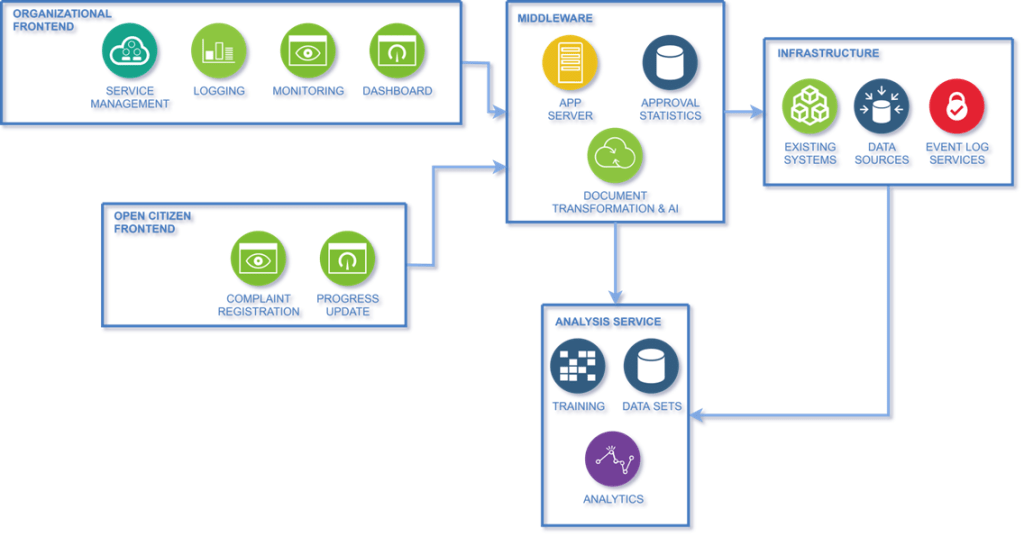
While our proposed system introduces groundbreaking capabilities, several implementation challenges necessitate consideration. User follow-up is paramount, recognizing that users require time and effort to adapt to the system (Fig 01). An effective follow-up mechanism is crucial for the successful adoption of our solution. Additionally, maintaining accuracy in occluded spaces poses challenges, as violations in non-visible areas are inherently difficult for the system to determine accurately. Moreover, ensuring regular monitoring relies on the periodic streaming of images, presenting challenges in obtaining timely and clear images from users and satellites alike. Addressing these challenges is integral to the seamless integration and effectiveness of our real-time construction monitoring system.
Governmental Support and Catalyst Role of the National Hackathon in Advancing Construction Monitoring
Strategic Backing from iDEA Project for Innovation Empowerment:
At the forefront of this transformative initiative is the unwavering support from the Innovation Design and Entrepreneurship Academy (iDEA) Project, a testament to the commitment of the government in fostering innovation. This support establishes an ideal environment for the convergence of ideas and solutions, particularly addressing the pressing challenges within Bangladesh’s construction sector.
International Collaboration: High Commission of India and Tech Mahindra Limited
A pivotal milestone in the trajectory of advancement is the strategic collaboration with the High Commission of India and Tech Mahindra Limited. This collaboration extends beyond national borders, infusing the hackathon with diverse perspectives, technological expertise, and a global outlook. Such partnerships amplify the impact of the National Hackathon on Frontier Technologies, enriching the initiative with a broader spectrum of knowledge and resources.
Holistic Training and Mentoring Strategies for Success
Recognizing the paramount importance of capacity building, the initiative incorporates robust training and mentoring strategies meticulously tailored for the winning teams. This multifaceted approach ensures that innovators are not only equipped with requisite skills but are also nurtured in a supportive environment, propelling their innovative solutions toward successful implementation. Effective training and mentorship become integral elements in the holistic development of the winning projects.
Charting a Sustainable Trajectory: Future Support and Investment Blueprint
The commitment to advancement transcends the hackathon’s conclusion. Envisioning a trajectory of sustained growth, the government outlines comprehensive future support and investment plans. This strategic blueprint is meticulously designed to nurture the winning projects, fostering their evolution from conceptualization to tangible, real-world impact within Bangladesh’s dynamic construction landscape.
System Specialties: Enhancing Existing Processes for Quick Violation Detection
Our innovative system, while not an exhaustive solution, significantly contributes to the existing processes, serving as a support system for swift detection of construction violations. It strategically integrates with current practices to offer enhanced efficiency in the detection process.
Intuitive, Effective, Cost-Efficient, and Unique Features
The proposed system leverages standard practices but enhances them for increased efficiency. Using CAD drawings as a reference ensures more accurate detection of standard regulations. Significantly, the system saves at least 3-4 hours on every evaluation process, showcasing its cost-efficiency. Being the first of its kind in Bangladesh, the system introduces unique features that work in tandem with current technology, positioning it as a trailblazer in construction monitoring methodologies.
Real-Time Monitoring Excellence through Satellite Integration
The system excels in real-time monitoring, utilizing satellite imaging to obtain periodic images of the plot area. This capability facilitates notifications to concerned parties on crucial times for evaluation, informs of prolonged inactivity on any registered plot, and provides pseudo real-time notifications. The integration of satellite technology elevates the system’s capabilities, ensuring a comprehensive and timely monitoring approach.
This innovative approach, supported by governmental initiatives and international collaborations, represents a paradigm shift in construction monitoring methodologies, emphasizing sustainability, efficiency, and continuous support for transformative projects. The proposed system’s unique features and real-time capabilities position it as a pioneering solution in Bangladesh’s construction landscape.
Conclusion
Summary of Key Findings: Charting a Path to Progress
In summary, the research has unearthed pivotal insights into the challenges of Bangladesh’s urban development, particularly in the construction sector. The emergence of the “Real-Time Building Construction Monitoring System” stands out as a beacon of innovation, addressing issues of compliance and safety. The core findings emphasize the critical need for adaptive solutions in the dynamic landscape of urbanization.
Implications for Sustainable Development in Bangladesh
The implications of these findings reverberate across the spectrum of sustainable development in Bangladesh. By effectively tackling construction challenges, the nation lays a robust foundation for resilient urban growth, aligning with global sustainability goals. The integration of technology-driven solutions not only ensures compliance but also fosters a safer and more sustainable built environment.
Recommendations for Future Initiatives: Nurturing Innovation
Moving forward, it is imperative to sustain the momentum of innovation. Continued governmental support, collaborative ventures with international entities, and targeted investments will foster an ecosystem conducive to pioneering solutions. Prioritizing education and awareness initiatives will also empower future generations to contribute meaningfully to the evolution of urban development practices.
Introducing Emerging Technologies for Efficient Urban Development
Looking ahead, the incorporation of cutting-edge technologies is pivotal for ushering in an era of efficient urban development. The strategic integration of AR/VR, drones, machine learning, big data, and AI promises to streamline processes related to land use clearance, architectural design approvals, and coordination among regulatory bodies. Embracing these emerging technologies positions Bangladesh at the forefront of global innovation in urban development, ensuring a progressive and technologically advanced future.
The integration of AI and IoT technologies in the construction industry can significantly improve safety, efficiency, and sustainability.
– Dr. Michael Zhang, Stanford University
Bibliography
Sarkar, S. (2018). South and Southeast Asia are most at risk by climate change. Retrieved on 14 November 2019 from
(https://www.thethirdpole.net/en/2018/12/05/south-and-southeast-asia-most-at-risk-by-climate-change/ )
Dey, S., & Basak, P. (2016). Rana Plaza disaster and thereafter: Evaluating efforts to manage safety and social security in the RMG sector, Bangladesh. (https://www.researchgate.net/publication/316433020_Rana_Plaza_Disaster_and_Thereafter_Evaluating_Efforts_to_Manage_Safety_and_Social_security_in_the_RMG_Sector_Bangladesh/citations )
(HBRI, 2015). Housing and Building Research Institute. (2015).Bangladesh national building code. Dhaka: Housing and Building Research Institute (HBRI).
(TBS News, 2023). 10 innovations win national Hackathon Awards
(https://www.tbsnews.net/bangladesh/10-innovations-win-national-hackathon-awards-49828 )
(RAJUK) : Rajdhani Unnayan Kartripakkha
(https://rajuk.portal.gov.bd/site/page/fd2d9ed1-371e-4796-974a-6c29b0c9b98e/- )
United Nations Department of Economic and Social Affairs. (2019). World Urbanization Prospects 2018
World Urbanization Prospects The 2018 Revision
Bangladesh National Building Code (BNBC). (https://www.dpp.gov.bd/bgpress/index.php/document/get_extraordinary/39201 )
UNDRR. (2015). Sendai Framework for Disaster Risk Reduction 2015-2030 (https://www.undrr.org/publication/sendai-framework-disaster-risk-reduction-2015-2030 )
How AI And Construction Robots Are Impacting The Construction Industry, by California Business Journal Editorial Staff
 A{AI}
A{AI} 